Dynamic roof load — what you need to know
Before buying a rooftop tent, you should know your vehicle's dynamic roof load. It specifies how much weight your car may carry on the roof while driving — and is the decisive factor when choosing the right rooftop tent. Most passenger cars have a dynamic roof load between 50 kg (small cars) and 150 kg (vans and off-roaders). You will find the exact value in your vehicle's owner's manual.
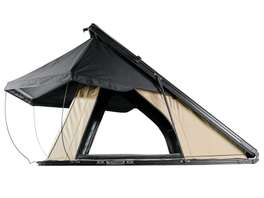
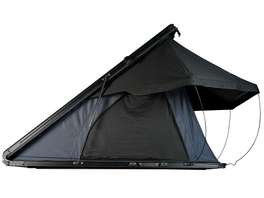
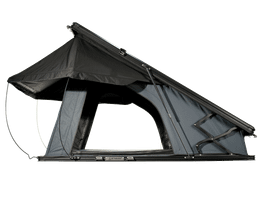
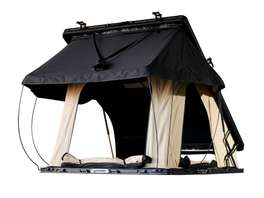
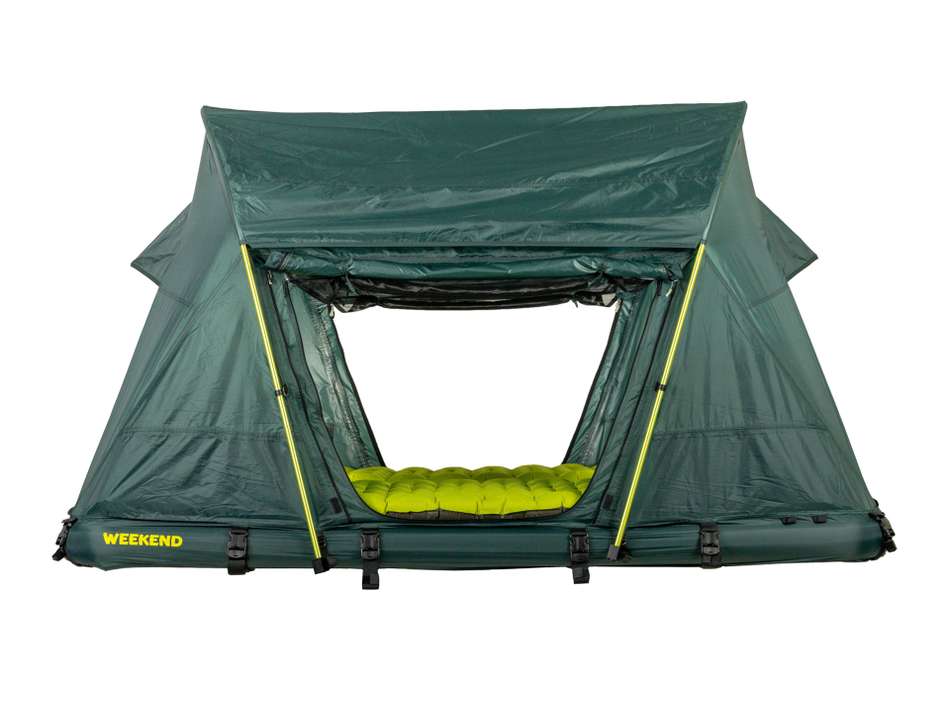
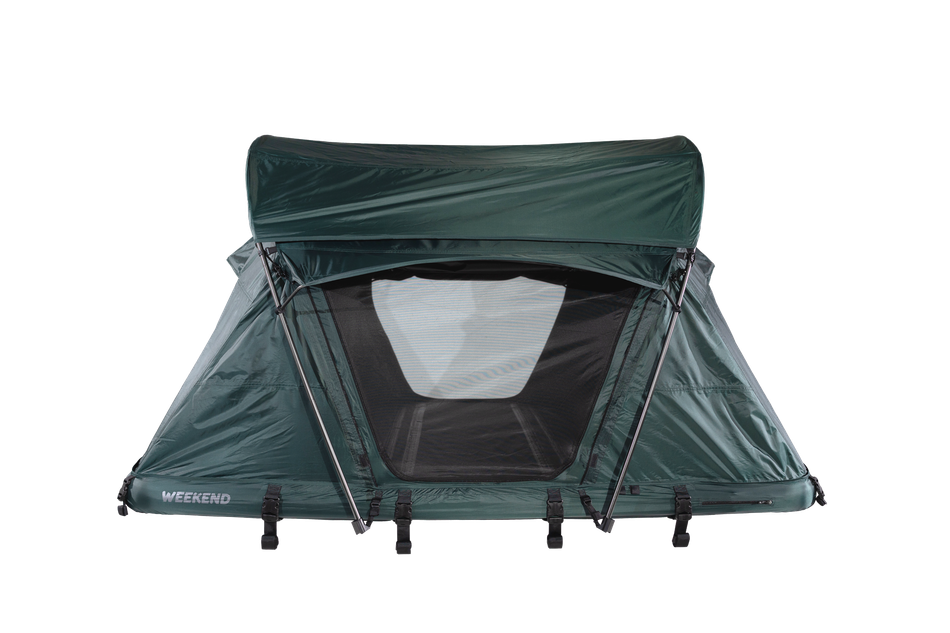
At Groenberg: the WEEKEND Classic and WEEKEND Comfort are transported in the car — any roof load from 10 kg is sufficient. For our soft-shell and hard-shell models Halvor, Alvar and Tjelvar, the combined weight of tent and roof rack (~7 kg) must not exceed the dynamic roof load.
Our interactive Roof Load Finder shows you in one click which vehicles are compatible with your chosen tent — from over 90 current models by VW, Toyota, Ford, BMW, Dacia and many more.
Does my car fit
a rooftop tent?
Choose your tent — and see instantly which vehicles are compatible.

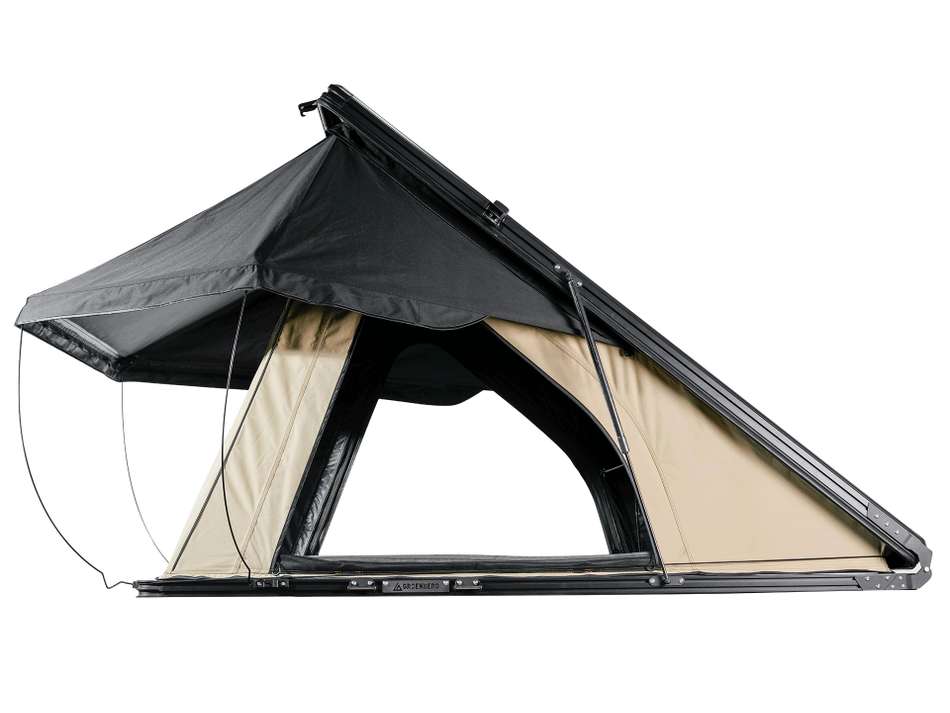
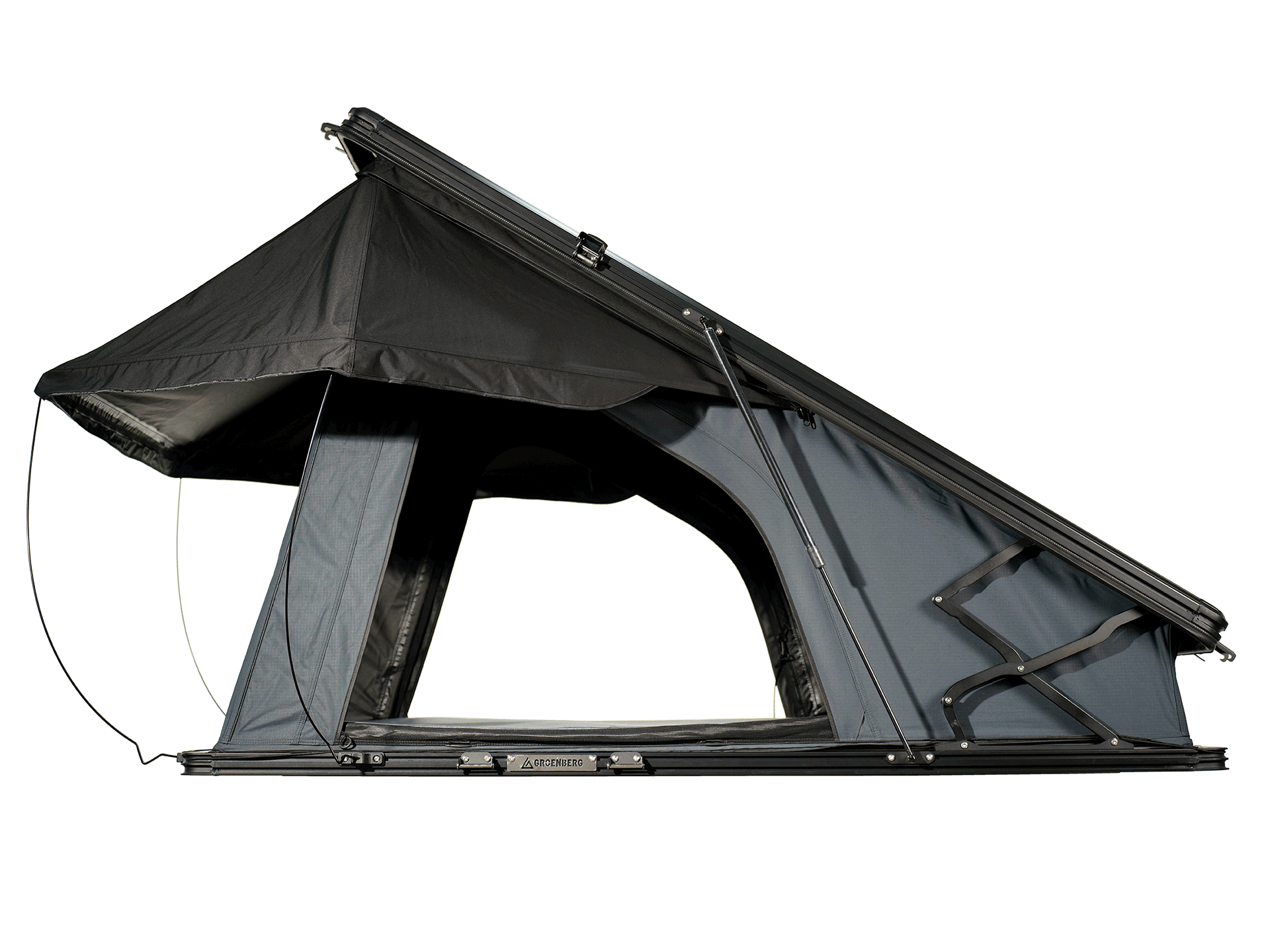
Choose your rooftop tent first
Click on a model above — we will then show you all compatible vehicles.
Which rooftop tent fits my car?
Whether Suzuki Jimny, VW Golf or Land Rover Defender — here you will find the most important vehicle models with their dynamic roof load and a concrete recommendation for the right Groenberg rooftop tent.
Rooftop tent with a low roof load — these vehicles need a special solution
Many popular vehicles have surprisingly low dynamic roof loads. For these, only the WEEKEND Classic or WEEKEND Comfort is an option — as both models are transported in the car and only a mountable roof rack is needed (from 10 kg roof load).
The Suzuki Jimny is the overlanding community's favourite — and one of the most searched vehicles in combination with rooftop tents. Despite its off-road character, the Jimny (GJ/HJ from 2018) has a dynamic roof load of just 30 kg. A classic soft-shell or hard-shell tent is therefore out of the question. The WEEKEND Classic is the ideal solution: it weighs 12.5 kg, is transported in the car and only needs the rack on the roof — perfect for the Jimny.
The Seat Alhambra and the mechanically identical VW Sharan have a dynamic roof load of 75 kg. The WEEKEND Classic and WEEKEND Comfort are straightforward. The Halvor (68 kg) also fits in theory — with rack (~7 kg) the total reaches approx. 75 kg, right at the limit. For certainty, choose the WEEKEND.
The Lada Niva is a genuine off-road classic — yet despite its off-road heritage it has only 50 kg dynamic roof load. Soft-shell or hard-shell tents are not an option. The WEEKEND Classic is the right choice here too: transported in the car, set up on the roof — and the Niva stays within its legal rating.
The Fiat 500 in the petrol version has a dynamic roof load of 50 kg — the electric version (500e) does not permit any roof luggage at all according to the manufacturer. Important: the panoramic roof reduces the roof load to 0 kg. Only with a standard steel roof and at least 10 kg roof load is the WEEKEND Classic an option.
The Renault Twingo has an especially low dynamic roof load of just 35 kg due to its rear engine. Conventional rooftop tents are not possible. The WEEKEND Classic is the only sensible rooftop tent option — provided a suitable roof rack can be fitted.
The trio VW Up!, Seat Mii and Skoda Citigo share the same platform and roof load: 35 kg. All three models are now discontinued but still common on the road. With the WEEKEND Classic — transported in the car — a rooftop tent adventure is still achievable with these city cars.
The Smart Fortwo does not permit any roof luggage in any generation according to the manufacturer. As no roof rack system is approved, the WEEKEND cannot be fitted either. The Smart Fortwo is therefore unsuitable for rooftop tents of any kind.
These electric vehicles do not permit any roof luggage according to the manufacturer — neither roof racks nor rooftop tents. The reason: aerodynamic optimisation and the high kerb weight of the batteries. Anyone wanting to combine an electric car with a rooftop tent should look at the VW ID.4 (75 kg) or Tesla Model 3 (~68 kg) — both permit at least the WEEKEND.
Top rooftop tent vehicles — the 15 most searched models
These are the vehicles most frequently searched in combination with rooftop tents. Here are the concrete roof load figures and Groenberg recommendations at a glance.
The VW Golf is Germany's most registered vehicle and accordingly frequently asked about as a rooftop tent platform. With a dynamic roof load of 75 kg (also as Estate), the WEEKEND Classic, WEEKEND Comfort and Halvor all fit without issue. The Alvar (approx. 84 kg incl. rack) marginally exceeds the roof load — not recommended. Important: check whether a panoramic sunroof is fitted, as it significantly reduces the roof load.
The VW Tiguan is one of Europe's most popular SUVs yet has only 75 kg dynamic roof load despite its size — the same as a Golf. The WEEKEND Classic, WEEKEND Comfort and Halvor are all compatible. The Alvar and Tjelvar exceed the roof load rating. Again: check whether a panoramic roof is fitted.
The VW Bulli is the classic rooftop tent platform — no other vehicle is mentioned more often in the community. With 100 kg dynamic roof load, all Groenberg models are compatible: WEEKEND, Halvor, Alvar and Tjelvar. The large roof surface also gives more flexibility when positioning the rack.
The Dacia Duster is one of the most searched vehicles in combination with rooftop tents — affordable, robust roof structure and factory roof rails. With 80 kg dynamic roof load, the WEEKEND Classic, WEEKEND Comfort and Halvor fit safely. The Alvar (approx. 84 kg incl. rack) is marginally over the limit — borderline, better to choose the Halvor.
The Toyota RAV4 with its 100 kg dynamic roof load is one of the best compact SUVs for rooftop tents. All Groenberg models are compatible — WEEKEND, Halvor, Alvar and Tjelvar. The solid roof structure and factory roof rails make the RAV4 a straightforward base for rooftop tent adventures.
The Land Rover Defender is the premium choice for overlanding and rooftop tent travel. With 100 kg dynamic roof load, all Groenberg models are compatible. The Tjelvar pairs particularly well with the Defender: hard-shell, flat packed, wind-stable to Beaufort 8 — both designed for demanding conditions.
The Skoda Octavia Estate is popular in the rooftop tent community for combining a large boot with a wide roof. With 75 kg dynamic roof load, the WEEKEND Classic, WEEKEND Comfort and Halvor are all possible. The low profile of the WEEKEND Classic suits the estate silhouette well.
The now-discontinued Skoda Yeti has a remarkably high dynamic roof load of 100 kg — unusual for a compact SUV of this class. All Groenberg models are compatible. The Yeti remains very popular on the used market and is one of the most affordable platforms for the Tjelvar and Alvar.
The VW Caddy offers 100 kg dynamic roof load and a large, flat roof — ideal for all rooftop tent sizes. All Groenberg models are compatible. The Caddy is particularly interesting for families wanting to combine a large boot with a rooftop tent.
The VW Passat Estate comes with 100 kg dynamic roof load and a generous roof surface. All Groenberg models are possible — including Alvar and Tjelvar. The Passat Estate is one of the most understated yet practical rooftop tent platforms: large boot, solid roof load, factory roof rails.
The Ford Ranger pickup with its 100 kg dynamic roof load and sturdy frame is a classic choice for rooftop tents. All Groenberg models are compatible. For the Ranger, mounting on a hard tonneau cover or roll bar is recommended rather than directly on the cab roof.
The VW Touran is a popular family vehicle with 75 kg dynamic roof load. The WEEKEND Classic, WEEKEND Comfort and Halvor all fit without issue. The WEEKEND is especially practical for Touran drivers as the van's high roof makes getting in and out more comfortable.
The Ford Focus — particularly as an Estate — has 75 kg dynamic roof load. The WEEKEND Classic, WEEKEND Comfort and Halvor are all compatible. The Focus Estate's wide roof surface provides a good mounting base for the rack.
The Mercedes G-Class is the premium off-road icon with 100 kg dynamic roof load. All Groenberg models are compatible. The Tjelvar — as a flat, aerodynamic hard-shell — particularly suits the angular silhouette of the G-Class. Important: mount on the factory roof frame, not directly on the bodywork.
The Hyundai Tucson and the closely related Kia Sportage each have 75 kg dynamic roof load. The WEEKEND Classic, WEEKEND Comfort and Halvor all fit. Both models come with factory roof rails as standard, simplifying rack installation. The Alvar and Tjelvar exceed the roof load rating.
Frequently asked questions about roof load and rooftop tent installation
What is the dynamic roof load and where do I find it?
The dynamic roof load specifies how much weight may be carried on the car roof while driving. For most passenger cars it is between 50 and 150 kg and is stated in your vehicle's owner's manual — not on the registration document. The combined weight of rack, tent and any additional luggage must not exceed this figure.
What roof load do I need for a Groenberg rooftop tent?
It depends on the model. The WEEKEND Classic (12.5 kg) and WEEKEND Comfort (14.5 kg) are transported in the car — only 10 kg roof load is required. For the Halvor (68 kg) at least 75 kg, the Alvar (77 kg) at least 90 kg, and the Tjelvar (81 kg) at least 100 kg dynamic roof load.
Can I mount a rooftop tent on a small car?
Yes. VW Polo, Opel Corsa, Renault Clio or Toyota Yaris have a dynamic roof load of 75 kg — enough for the WEEKEND Classic or the Halvor. The WEEKEND Classic, thanks to transport in the car, even works on city cars like the Hyundai i10 (50 kg roof load).
Why do electric cars often have a low roof load?
Electric cars have a higher kerb weight due to their heavy batteries and are more aerodynamically optimised. Some EVs — VW ID.3, Dacia Spring or Renault Zoé — do not permit any roof luggage at all according to the manufacturer. Others like the VW ID.4 (75 kg) or Tesla Model 3 (approx. 68 kg) have usable but limited roof loads.
Does a panoramic roof reduce the roof load?
Yes, considerably — often by 20–25 kg compared with the standard version. Some manufacturers do not permit roof racks at all with a panoramic roof. Always check the model-specific owner's manual for the relevant trim level.
What is the difference between static and dynamic roof load?
The dynamic roof load applies while driving — typically between 50 and 150 kg and the decisive figure for rooftop tents. The static roof load applies to the stationary vehicle and is many times higher. For choosing and operating a rooftop tent, only the dynamic roof load is relevant.